

Large-Scale Food Production & Controlled-Environment Agriculture
Built For Growth
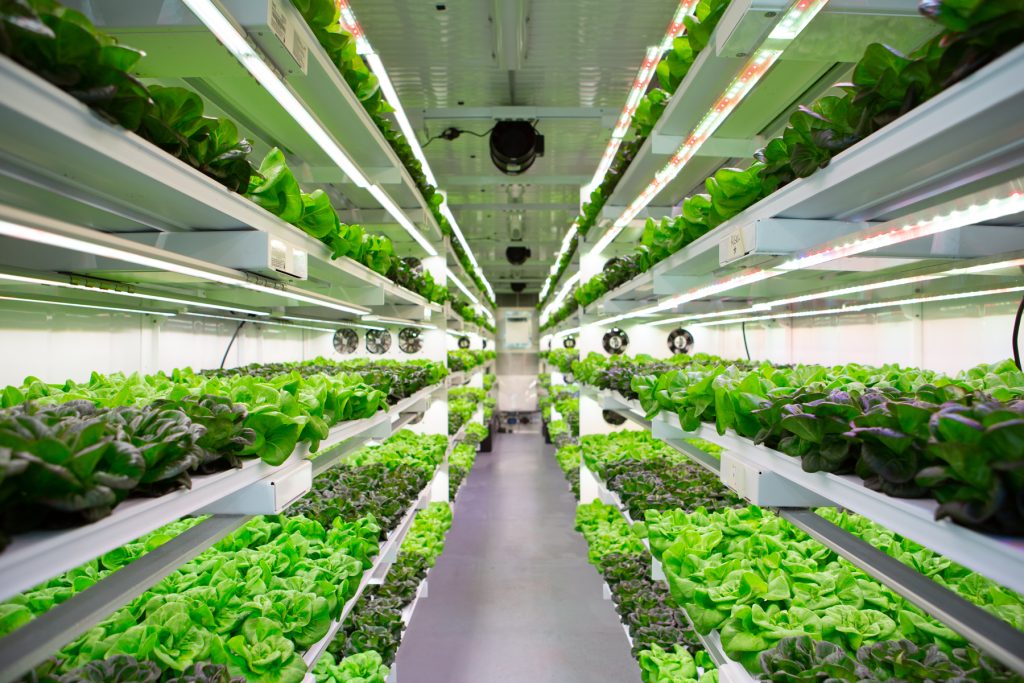
Sure Food Solutions supports the planning, evaluation, and strategic alignment of large-scale food production and controlled-environment agriculture (CEA) projects—including hydroponic systems—as part of broader regional food, infrastructure, and economic development efforts.
These projects are complex and capital-intensive. Success depends on realistic alignment across technology, capital, workforce, energy, logistics, governance, and market access. Our role is to support informed decision-making—not to sell equipment, promote specific technologies, or operate farms.
Why Hydroponics for Alaska
The Cost of Not Finding a Better Way
Cost to the State
Cost to our Health
Cost to the Fish
Water
- It takes ~15 gallons of water to produce just o
- 90% of U.S. lettuce production is in drought-stricken CA and AZ
- Over-extraction of groundwater for irrigation can lead to aquifer depletion, impacting local ecosystems and drinking water supplies
Logistics
- Transportation costs account for 10-20% of total costs in food chain expense
- Labor shortages are impacting timely delivery
- Lettuce transport produces emissions typically 161 grams of CO2 per ton-mile
- Most produce loses 30% of nutrients 3 days after harvest and further declines after long transport
Waste
- 30-50% of harvested lettuce is wasted before it reaches consumers
- 20-30% (estimate) of lettuce is wasted post consumer purchase
- Estimated cost of lettuce waste in the U.S. can reach hundreds of millions of dollars annually
Understanding the Complexity of Large-Scale Systems
Large-scale food production and CEA projects sit at the intersection of multiple systems. Long-term viability depends on alignment across factors that are often evaluated in isolation, including:
Technology & system design

Energy availability, cost, & resilience

Capital requirements & financing structures

Workforce availability, training, & retention

Logistics, distribution, & cold chain capacity

Governance, ownership, & operating accountability

Market demand, pricing assumptions, & offtake reliability
We help clients assess how these elements interact—and where misalignment creates risk.
Our Role in Large-Scale Projects
Sure Food Solutions provides systems-level planning and evaluation support tailored to the scale and context of each project. Our work commonly includes:
Feasibility and site evaluation
Technology and system assessment
Capital and operating model analysis
Workforce and operational planning
Market integration and offtake strategy
General contracting support for new builds and adaptive reuse
Alignment with regional economic development goals
A No-Competition Model
Meeting Local Demand Together
Sure Food Solutions does not operate farms to compete with local producers. We operate under a no-competition model focused on working alongside farmers to meet local demand together.
In this approach, we are not in competition with other farmers—we are collectively in competition with unmet local demand, imports, and supply gaps that exist due to seasonality, scale constraints, infrastructure limitations, and logistics challenges.
Large-scale and controlled-environment systems are used intentionally to complement existing production, fill gaps, and support regional capacity—without displacing independent farms or distorting local markets.
How No-Competition Farms Support Local Agriculture
Meeting unmet local demand
Market stabilization and aggregation
Season extension and gap filling
Processing and value-chain support
Risk buffering and redundancy
Demonstration and workforce pathways


How the No-Competition Model Works

Local & Tribal Farms

Aligned Production / Shared Infrastructure

Processors & Aggregators

Markets & Institutions
Sure Food Solutions is positioned as support infrastructure—helping local producers collectively meet local demand—rather than competing with farm operations.
When Large-Scale Systems Make Sense
Large-scale production and CEA systems can be appropriate tools when key conditions are present and aligned. These may include:
Verified and durable market demand
Reliable and affordable energy access
Available and trainable workforce
Functional logistics and distribution pathways
Clear governance and operating accountability
Adequate capitalization and risk tolerance
We help clients determine whether, when, and how these systems should move forward—and when alternative approaches may deliver greater impact with lower risk.
Clear go / no-go decision points are a core outcome of this work.
Risk, Readiness, and Decision Support
Many large-scale projects fail not because of a single flaw, but because risks compound across systems. Our work emphasizes:

Early identification of structural risk
Transparency around assumptions and tradeoffs
Phased decision-making tied to readiness milestones
Alignment between public goals and private operations
Relationship to Our Broader Food System Work
Large-scale food production is one component of a resilient food system—not a standalone solution.
We approach these projects in coordination with producers, processors, institutions, communities, and public agencies to ensure they complement existing assets rather than compete with or displace them.
We connect large-scale systems to the full food ecosystem, including:
Primary producers and growers
Processing and aggregation infrastructure
Institutional buyers and public procurement
Workforce development and training pathways
Regional and community economic development strategies
Frequently Asked Questions
Does Sure Food Solutions compete with local farmers?
No. Sure Food Solutions does not compete with farmers. We work alongside producers to meet local demand together, using a no-competition model that strengthens—not replaces—existing agriculture.
What do you mean by “meeting local demand together”?
It means aligning production, infrastructure, and markets so that local farms and supporting systems collectively serve demand that is currently met through imports or remains unmet.
Who are you competing with, if not farmers?
We are collectively competing with supply gaps, imports, and lost market opportunities—not with local producers.
Will these projects undercut local pricing or markets?
No. Pricing and market alignment are evaluated carefully to avoid displacement or price suppression. Projects are designed to complement peak local production, not compete with it.
Why include large-scale or controlled-environment systems at all?
When thoughtfully designed, these systems can fill seasonal gaps, support consistent institutional supply, and strengthen shared infrastructure—roles that often exceed the capacity of individual farms without replacing them.
What happens if a project would compete with existing farms?
That is a clear no-go. We do not advance projects that would undermine local producers or distort regional markets.
Do you sell equipment or represent specific technologies?
No. We are not a vendor and do not sell equipment. We provide independent evaluation and planning support.
Can you support new builds or retrofits for food production facilities?
Yes. We provide general contracting support for new builds and adaptive reuse—helping align design and construction decisions with operational requirements for food production.
